Onward I went to my first border crossing by foot. There is something very exciting about walking across a border to a new country, especially, when your life is on your back, you have no plans in the world and it is the day before your birthday, as was the case this brisk sunny Sunday morning. It was also Argentina, the country and culture I had been most looking forward to getting to know. After the mission it took to get there, booking it across most of Bolivia and back again within a few days, it was tremendously gratifying to finally step over that border line. I wouldn’t go as far to say my excitement was on Martin Lawrence’s level after he realizes he just unintentionally escaped across the Mexican border at the end of Blue Streak, but you get the idea.
Once in La Quiaca, I went and sorted out a bus to Salta, the biggest city in the north of the country, and seven hours later, I was ringing the bell at the hostel front door. That first night out I received a crash course on Argentinean nightlife and quickly learned that the rumors regarding the late hours in which it takes place were facts and not rumors. I got back at sunrise and, consequently, spent the bulk of my actual birthday asleep until about 5PM.
When I woke up, I introduced myself to the only person in the room, Davide, who was 35, traveling by himself from Italia. He asked if I had had a big night and I told him yes, indeed, it’s my birthday, and we soon had plans to go to out for a parilla later that night. Then entered Nicolas, 21 from Brazil, who opted to join and the three of us strolled out to the main strip in downtown Salta.
Quick note: in Argentina they pronounce the “y” and “ll” sound as a mix between our “j” and “sh.” So, where we learn parilla to sound something like parreeya, here it is pronounced “parreesha.” Not “me yamo Jose,” but me shamo Jose,” etc. Also, the word chamuyero (shah-moo-sher-ro) is slang used to refer to something like a bullshitter.
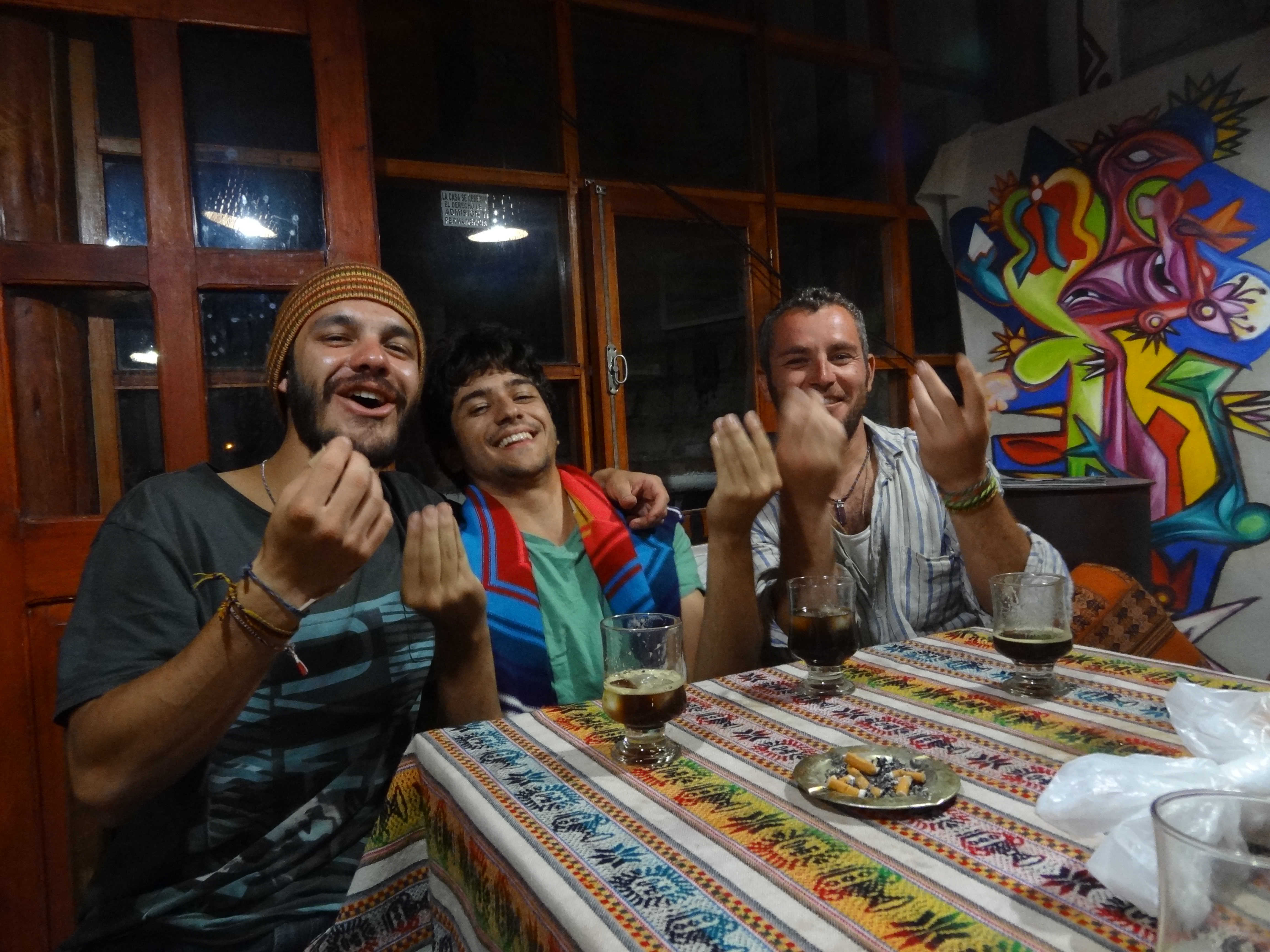
Los Tres Chamuyeros
Both Nicolas and Davide are fluent in Spanish and since my Spanish was better than their English all of our time together was spent speaking the language I had hoped to improve upon, which was a welcome change after hanging out exclusively with gringos during my four weeks in Bolivia. Davide’s espanol, or castellano as it is called in Argentina, was especially entertaining to listen to because he spoke it with the same rhythm and demonstrative hand motions that you would expect an Italian to speak with.
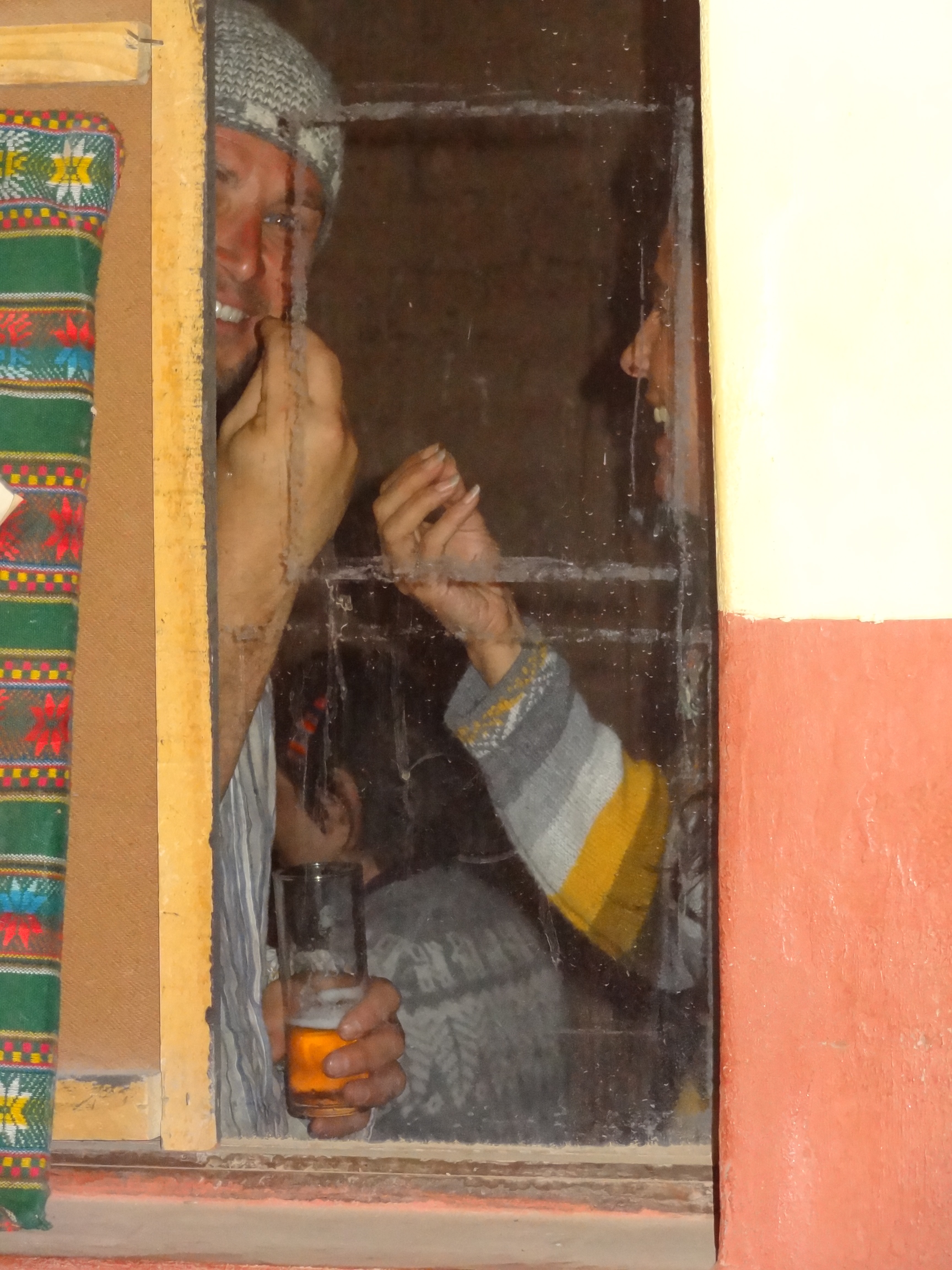
When we sat down at dinner, I hadn’t the slightest idea what a parilla was, but the two of them seemed to know what they were talking about so I just followed suit. It turns out a parilla, when ordered at a restaurant, is basically a massive amount of meat in some variety. It can include several different animals, different cuts of steak (as we are accustomed to seeing), or, as we enjoyed that evening, all different parts of the cow. I tried several cuts I had never indulged in like tongue, blood sausage and other parts of the body to which Davide would just laugh and point to when I asked what I was consuming. It was all surprisingly delicious, if not a bit barbaric. That night was also the tail end of Carnaval, so we had an impressive parade of festively dressed dancers and musicians pass by while we enjoyed our cow and a few bottles of red. Alas, I was in Argentina.
After an amazing meal, we stumbled upon a local dive bar and proceeded to entertain and confuse groups of local girls with our peculiar trio of origins and accents. I couldn’t have asked for a better way to bring in 24.
The next couple days we spent exploring Salta and having parillas of our own back at the hostel, inviting whoever was around. Davide is a diehard fan of Inter Milan and they had a big match vs. a good French team one of the days so we all gathered in the TV room to pull for the Italian. I didn’t realize, but I guess the Italians and the French have a long running feud, so this was an important match. It went on back and forth and looked like it was going to end in an acceptable 0-0 draw until the French team scored 3 minutes into stoppage time, literally on the last play of the game. Davide flipped over one of the lawn chairs and frantically paced around momentarily cursing in Italian, but we were all laughing within minutes at how the whole thing panned out.
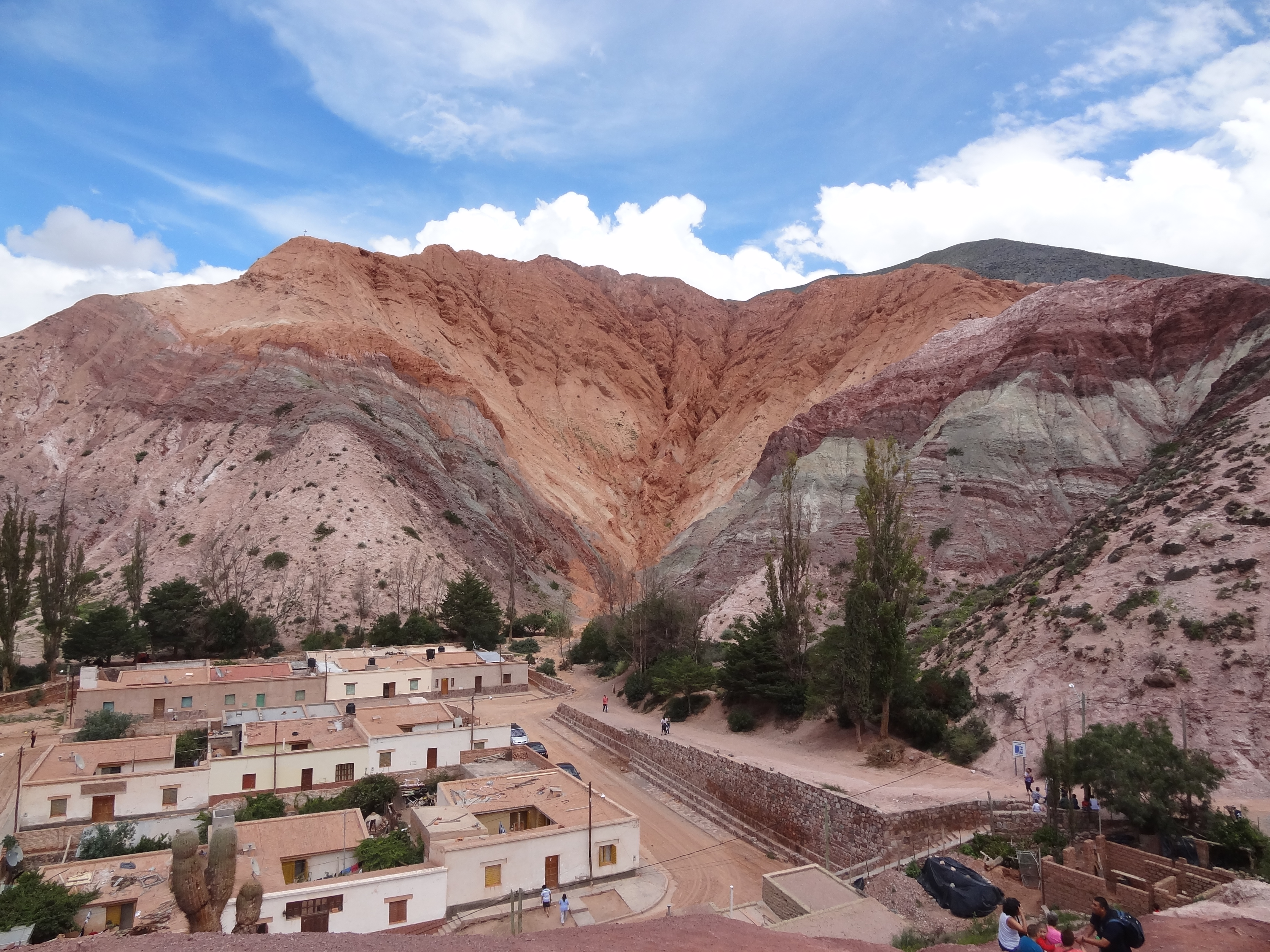
Early the following morning, we set out to Purmamarca, a small one-horse town famous for its “7 colored mountains,” about 3 hours north of Salta.
 We hiked around the surrounding hillsides with an Argentinean girl, Micas, that we’d met at the hostel and returned to have my first instruction in mate. Not mate like a Brit or Aussie would say, but mah-tay, the herbal tea drink that local people of all ages are sucking down all hours of the day. If you didn’t know it, you’d think they were doing some sort of funny drug because of both the appearance of the device used to drink it and the communal manner in which it is shared. They drink it out of a round gourd made of pumpkin or butternut squash with a metal straw called a bombilla and pass it around in a circle for hours on end, pouring a new fill of hot water for each person next in line. While there are believed to be many health benefits to drinking mate and although it gives you a nice little buzz and heightened focus, its cultural importance far outweighs any physiological reasons for its mass consumption. From the responses of the people I’ve asked, they start drinking mate when they are two or three years old, in very small quantities to start and by the time they are a teenager they each have their own setups and drink multiple mates a day with their friends and family. Micas explained to me, when you’re young you see your older family members enjoying mate together and it makes you want to partake in the ritual even more.
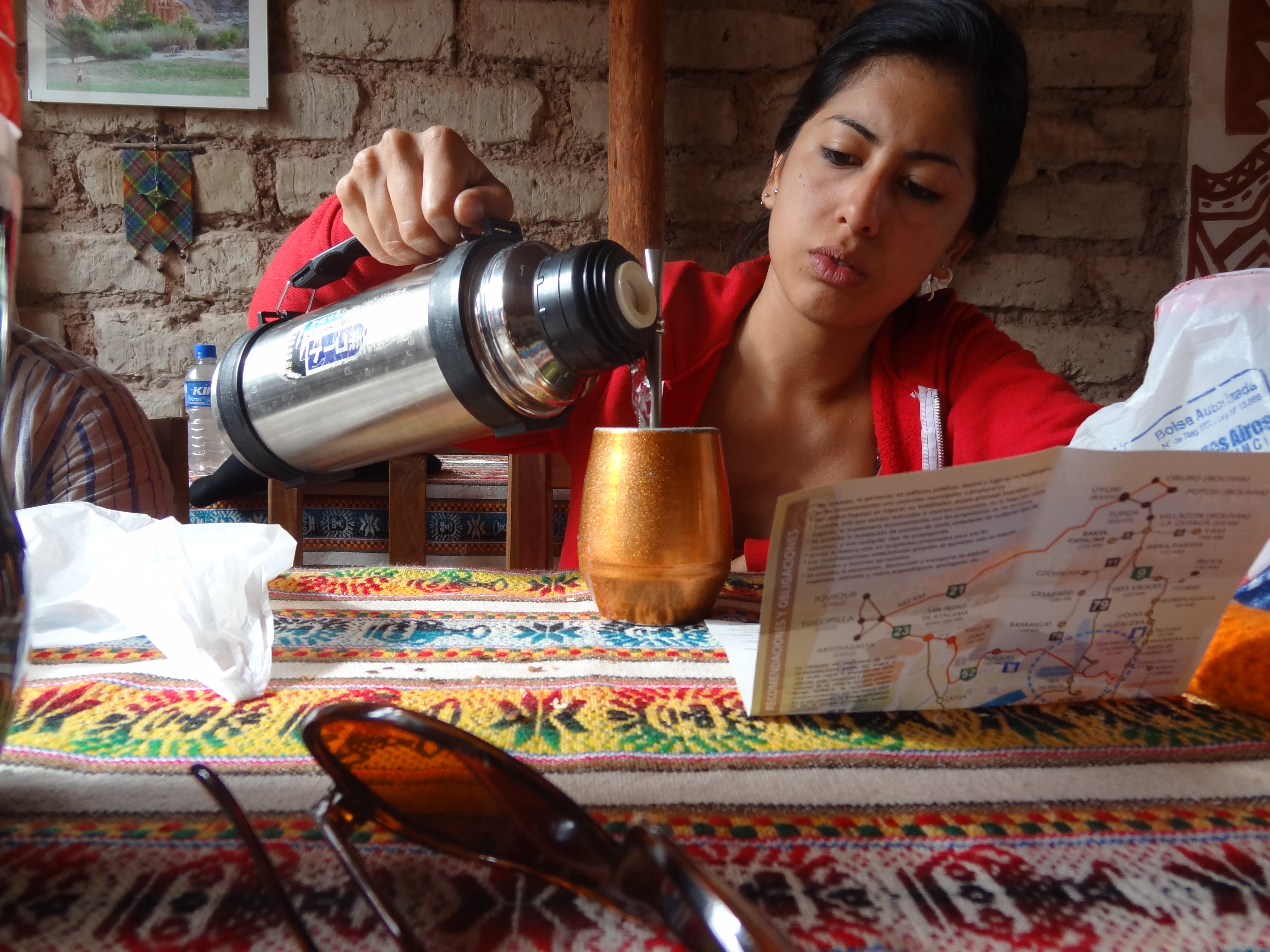
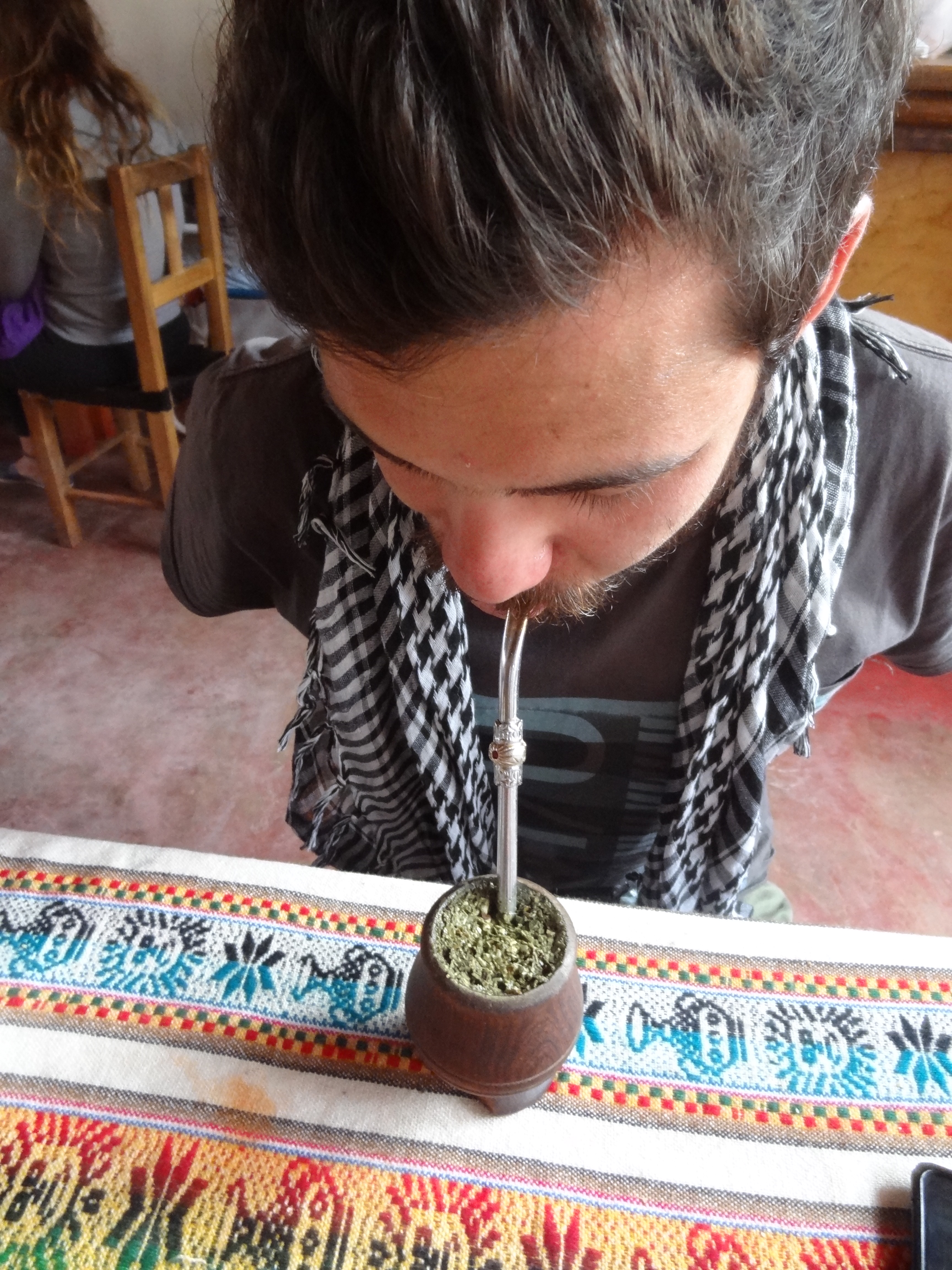
Learned quickly not to ever move the bombilla
The whole thing fits in perfectly with the Argentine culture, and that of all of Latin America for that matter, in which time spent together, especially with family, is much more valued than in most other Western cultures. In the U.S. we become impatient and even angry if our server does not bring us our food out quickly and then the check immediately once we are done. In Latin America, it doesn’t work like that. There isn’t this inherent sense of urgency to quickly move on with your day and get to the next task at hand. You usually don’t get the check right away, not because the servers are lazy, but because they don’t expect that you want to get up and leave as soon as you’ve taken your last bite. Instead, meals are one of the, if not the, most important parts of the day, and they often last hours. Instead of cleaning the dishes and turning on the T.V. and tuning each other out, here, in Argentina, they enjoy long meals together and then pass around some mate, and I love it.





 greengojoe